Managing Tube Inflation and Cold Shock
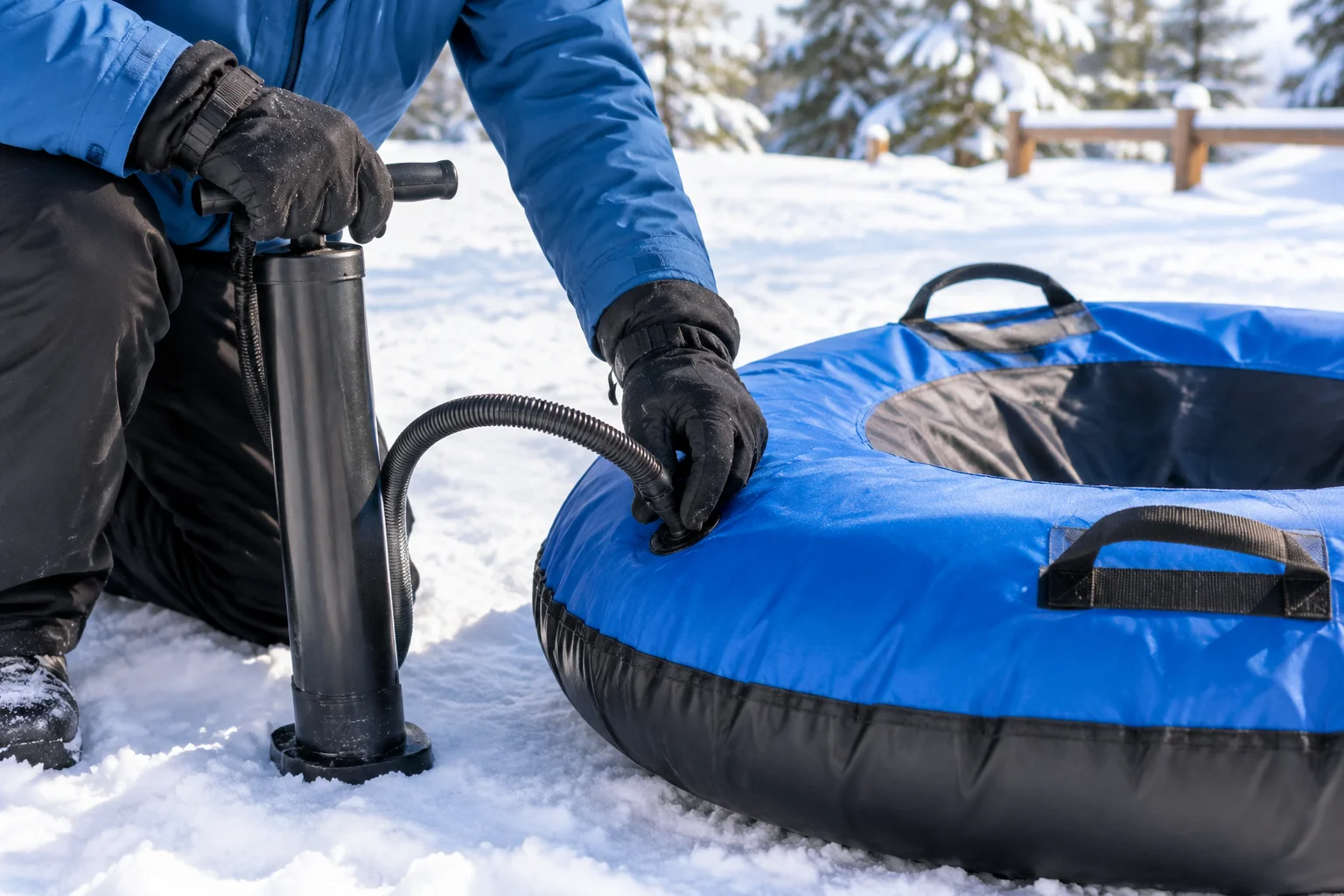
Air contracts rapidly when temperatures plunge. Filling an inner bladder inside a heated garage often leads to a soft tube once it hits freezing hill powder. Inflate the tube until the outer canvas fits snugly without deep wrinkles, but avoid ballooning the inner rubber until it feels rigid to the touch. Check pressure periodically at the hill. A moderately firm bladder absorbs bumps without straining stitched seams.
Never bring a freezing tube into a warm house and leave it fully pressurized. Expanding air creates massive internal pressure against valve stems and seams, which can rupture industrial rubber. Release a brief burst of air from the valve core whenever bringing cold gear indoors for the evening.
Cleaning Hard Shells and Patching Tears
Slush, grit, and road salt collect along the tarpaulin bottom and woven nylon covers. Rinse the outer shell with lukewarm fresh water and mild dish soap after heavy weekend use. Harsh petroleum solvents dissolve waterproof polyurethane coatings and weaken welded seam tape, so keep chemical cleaners far away from your gear.
A small rubber patch applied correctly at the start of the season saves an entire sled from bursting during high-speed runs down hard-packed trails.
— Michael Brown, Winter Gear Specialist
Punctures happen when gliding over hidden gravel or frozen pine cones. Carry an adhesive vulcanizing tire patch kit in your daypack. Clean the compromised area with isopropyl alcohol, scuff the rubber lightly with emery paper, apply rubber cement evenly, and press the patch firmly for two minutes before reinflating.
Seasonal Off-Hill Storage Protocol
Moisture trapped between an inner tube and outer canvas cover fosters mildew and rots stitching over the summer. When winter concludes, take the inner rubber bladder out of the fabric jacket. Dry both components thoroughly in a shaded, well-ventilated room over forty-eight hours before packing them away.
Store the deflated tube folded loosely inside a dark, climate-controlled container. Direct sunlight, ozone from electric motors, and extreme attic heat break down vulcanized rubber, causing micro-fissures and brittle sidewalls before the first snowfall returns.