Anatomy of Modern Snow Sleds: Materials and Form Factors
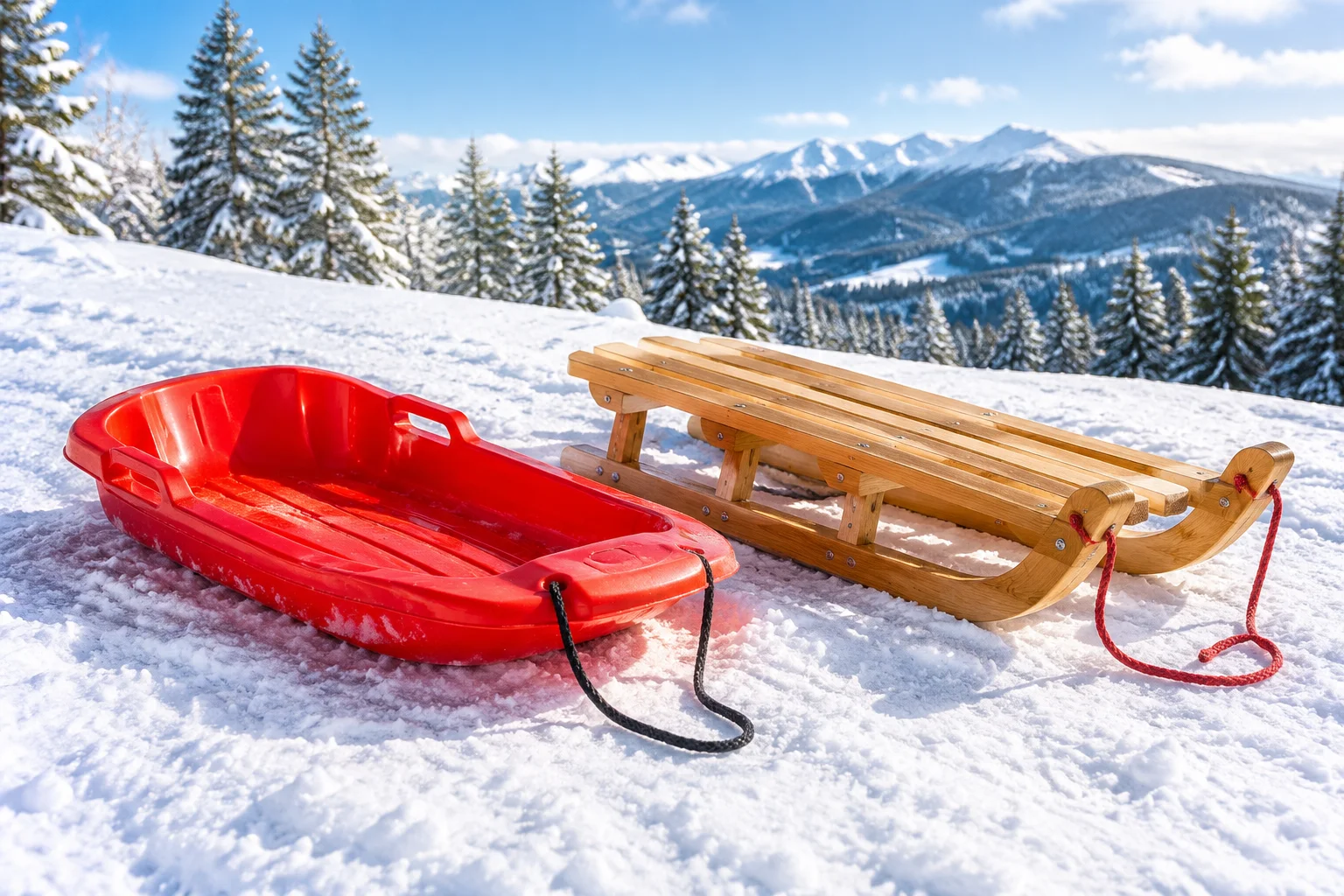
Snow sleds distribute gravitational force along snow crystals, where surface friction determines top speed and tracking stability. High-density polyethylene (HDPE) provides supreme impact resilience at sub-zero temperatures, preventing brittle fractures when hitting hidden roots or ice ridges. In contrast, steam-bent ash or birch toboggans leverage natural wood flex to absorb washboard undulations, delivering superior glide over groomed communal runs.
Steel-runner sleds elevate the chassis above the snowline, concentrating rider mass across thin blades to cut through crusty layers and hard-packed trails. In deep powder, however, narrow blades sink rapidly, making wide-body molded saucers or flat-bottomed foam sliders far more effective at keeping the rider afloat above fresh snowfall.
Matching Hull Geometry to Snow Consistency
Channel grooves along the underside of a molded sled act like marine skegs, preventing uncontrollable spinouts on steep descents. Flat hulls excel at spinning and freestyle sliding, whereas grooved hulls track in a straight line, reducing inadvertent rollover risk when traversing cross-slopes.
A sled with directional tracking grooves and molded handles reduces trajectory deviation by over forty percent on packed granular snow.
— John Carter, Winter Gear Specialist
Air temperature also alters snow grain morphology. Fresh powder near the freezing mark creates higher moisture surface suction, favoring slick, waxable plastic compounds. Cold, dry sub-zero snow behaves more like fine abrasive sand, rewarding hard fluoropolymer bases or polished stainless steel runners that minimize microscopic drag.
Steering Mechanics & Safety Limits
Maneuverability separates recreational toys from controlled descent crafts. Modern steerable sleds incorporate front articulating skis connected to automotive-style linkages or hand-activated drag brakes. These mechanisms allow precise deceleration before obstacles, ensuring quick stopping distances even on wind-scoured ice patches.
Always match rated payload specifications to total rider weight, including winter boots and heavy parkas. Overloading a chassis compresses the suspension clearance and distorts tracking channels, causing sluggish response times and unexpected side-slipping into boundary zones.